Column
Hydraulic Pump Maintenance: Preventive Tips, Failure Signs, and Service Life
Hydraulic Pump Maintenance: Preventive Tips, Failure Signs, and Service Life
When construction and industrial machinery is in daily operation, hydraulic system trouble and unexpected shutdowns
are a common challenge.
To keep equipment running reliably and avoid unnecessary repair costs, regular inspection and prompt action are
essential.
This article explains the warning signs that indicate when a hydraulic pump needs attention, practical inspection
methods to help extend its life, and the proper procedure for bleeding air from the system.
It also covers the advantages of using genuine parts when repairs are needed.
Use it as a practical reference for your day-to-day operations.
Warning Signs That a Hydraulic Pump Needs Maintenance
When operating machinery on site, you may occasionally notice movement or responses that feel different from
normal.
These subtle changes can be signs that it is time to inspect the hydraulic pump.
To help you address problems before the damage spreads, let’s look at three specific symptoms.
- Pressure fails to build
- Unusual noise or vibration occurs
- Hydraulic fluid leaks or turns cloudy
Do not overlook these warning signs, and check the situation promptly.
Related Articles:Hydraulic Pump Failure: Common Causes, Symptoms, and Troubleshooting Tips
Pressure Does Not Build Up
If the machine cannot raise heavy work equipment, insufficient pressure in the hydraulic circuit may be the cause.
Slow boom movement or travel, on the other hand, may indicate insufficient flow from the pump.
It is important to distinguish a loss of force from a reduction in operating speed.
Internal pump wear is not the only possible cause.
An incorrectly set or malfunctioning relief valve, or internal leakage in a cylinder, can produce similar symptoms.
Start by checking the hydraulic oil level and the condition of the filters.
If the problem persists, have a specialist measure pressure and flow under the specified conditions to isolate the cause within the hydraulic circuit.
Related Articles:Hydraulic Pump Not Building Pressure? Causes, Troubleshooting Steps, and Repair Costs
Unusual Noises and Vibration
If the hydraulic pump produces unusual noises or vibration, inspect the following components:
- Sliding components inside the pump
- Bearings
- Coupling
- Suction-side piping and filters
In addition to worn internal components and damaged bearings, coupling misalignment can also cause vibration.
Cavitation occurs when a drop in suction pressure causes some of the hydraulic oil to vaporize, forming vapor bubbles. Aeration occurs when outside air enters the hydraulic oil through loose connections or other points. Because these conditions have different causes, use the appropriate inspection approach for each.
Oil Leaks or Milky Hydraulic Oil
Investigate oil leaks and milky hydraulic oil as separate issues.
Oil leaks can result from deteriorated seals, loose fittings, or damaged hoses.
High-pressure hydraulic oil can cause serious injury if it penetrates the skin, so never use your hands or a cloth to locate a leak.
Hydraulic oil may develop a milky appearance when water or air enters the system.
Whether the oil becomes clear again over time is not enough on its own to identify the cause.
Safely collect an oil sample and check its appearance, water content, and other relevant properties.
Identify where water or air is entering the system, repair the components responsible, and determine whether the hydraulic oil needs to be changed or the hydraulic circuit flushed.
The Typical Service Life of a Hydraulic Pump
The service life of a hydraulic pump depends on the operating environment and how frequently it is inspected.
With regular maintenance, it can generally operate reliably for around 7,000 to 9,000 hours.
If hydraulic fluid temperature is not managed properly or filters are not cleaned, performance may deteriorate within
just a few years.
Regular maintenance and reducing the load on the unit are the keys to extending its service life.
Hydraulic Pump Service Life Varies with Operating Conditions
A hydraulic pump’s service life is not determined by operating hours alone. The rate of internal wear and performance deterioration depends on the following factors:
- Pump type
- Operating pressure and load
- Hydraulic oil cleanliness
- Hydraulic oil temperature
- Suction-side conditions
- Maintenance practices
Prolonged operation at high pressure or under heavy loads places greater stress on sliding components and bearings.
Contaminants in the hydraulic oil and abnormal oil temperatures can also accelerate wear and increase internal leakage.
Suction-side restrictions and air ingress can lead to cavitation and inadequate lubrication.
Do not decide when to replace the pump based solely on operating hours. Measure discharge pressure and flow under consistent operating conditions.
Also record case drain flow rates over time. If the flow rate increases, investigate the possibility of internal wear.
Compare the measurements with the manufacturer’s specifications to determine whether the pump needs to be overhauled or replaced.
Maintenance Practices That Help Extend Hydraulic Pump Life
Even small maintenance efforts in day-to-day operations can reduce equipment trouble.
To prevent unexpected failures and keep the machine operating safely over the long term, a combination of routine
checks and periodic maintenance is highly effective.
The following four maintenance practices are especially important.
- Inspect the pump for hydraulic fluid leaks, unusual noise, and vibration
- Understand how contaminated hydraulic fluid affects the inside of the pump
- Measure discharge pressure and bearing temperature regularly
- Inspect seals for deterioration and determine the right time for replacement
Let’s look at each of them in turn.
Related Articles:How to Test a Hydraulic Pump: Step-by-Step Methods and Inspection Procedures
Inspect the Pump for Hydraulic Fluid Leaks, Unusual Noise, and Vibration
One of the basics of daily inspection is to check the machine visually and by listening before starting operation.
Inspect the outside of the pump and the pipe connections every day for any sign of fluid seepage.
Even a small leak can eventually lead to a serious drop in hydraulic pressure.
It is also important to listen for unusual sounds and check for unnatural vibration immediately after startup or when
the pump is under load.
Abnormal noise can provide an early warning of internal wear or air entering the system.
By staying alert to day-to-day changes, you can take action before the problem grows into a major repair.
Understand How Contaminated Hydraulic Fluid Affects the Inside of the Pump
Hydraulic fluid is often described as the lifeblood of the machine, and its condition has a direct impact on system
life.
If metal particles, dust, or other contaminants mix into the fluid, they can wear down the pump’s precision internal
components and gradually increase clearances.
As pressure escapes through those gaps, the machine may eventually stop operating properly.
To prevent contamination, check the color and viscosity of the fluid regularly and replace it completely once the
specified service interval has been reached.
To ensure the filter can do its job properly, clean or replace it based on the recommended operating hours so the
inside of the system stays clean.
Regularly Measure Discharge Pressure and Bearing Temperature
A hydraulic pump’s condition cannot be assessed by discharge pressure alone.
In addition to pressure, measure the discharge flow rate and hydraulic oil temperature, and compare the results with the specified values.
Record the following operating conditions and measurements:
- Engine speed
- Hydraulic oil temperature
- Discharge pressure
- Discharge flow rate
- Load conditions
Oil viscosity changes with temperature, and pump speed and load also affect the readings.
Consistently recording measurements under the same conditions makes it easier to track changes in performance.
Bearing temperature is not a standard measurement for all types of construction equipment.
Refer to the operator’s manual and service documentation, and take measurements at the locations and using the methods specified by the manufacturer.
Inspect Seals for Deterioration and Determine the Right Time for Replacement
The seals and packings that keep the inside of the pump sealed and control fluid flow are made of rubber or resin and
will deteriorate over time.
Because they are constantly exposed to heat and pressure, they gradually lose elasticity, harden, and eventually
crack, causing hydraulic fluid leaks.
These parts are difficult to inspect from the outside, so their condition should be checked carefully during teardown
inspections.
Rather than waiting until leakage occurs and then rushing to replace them, it is safer to replace them early based on
the service hours recommended by the manufacturer.
Doing so helps reduce the risk of secondary failures.
Related Articles:Hydraulic Pump Components Guide: Main Parts, Functions, and Failure Response
Distinguish Between Daily and Periodic Inspection Tasks
Daily inspections involve operators checking the machine’s condition before starting work and during operation to detect early signs of a problem. The main items to check are:
- Hydraulic oil level
- Oil leaks
- Unusual noises
- Warning indicators
Compare inspection findings with previous records and assess whether any unusual changes warrant stopping the machine.
Never use your hands to check for high-pressure oil leaks. Take appropriate safety precautions and consult a specialist.
During periodic inspections, use dedicated measuring instruments to check pressure and flow.
Taking hydraulic oil samples to analyze contamination levels and water content is also an effective approach.
Replace filters at the intervals specified in the operator’s manual, and have the pump disassembled and inspected as needed.
Determine the timing and scope of maintenance based on the manufacturer’s maintenance standards and the machine’s operating conditions.
Air-Bleeding Procedures to Prevent Air Entrapment in a Hydraulic Pump
Air entrainment in hydraulic fluid can significantly reduce machine performance.
If you know how to deal with it properly, you can resolve problems quickly during operation and restore the machine’s
original performance.
Here, we will look at the issue from the following three perspectives.
- Understand what causes air to enter the system and the risks of leaving it unaddressed
- Use the air bleed valve to release trapped air
- Bleed air by operating the cylinders on the machine
Make sure you understand how each method works and follow the correct procedure to work safely.
Understand What Causes Air to Enter the System and the Risks of Leaving It Unaddressed
Air usually enters the hydraulic circuit right after hydraulic fluid has been changed or when a loose pipe connection
creates a gap.
It can also be drawn in when the fluid level in the tank becomes too low.
If the system is used with air still mixed in, machine response may become sluggish and the equipment may move
unpredictably, creating a safety risk.
In addition, when air bubbles collapse inside the pump, they create powerful shock waves that can erode metal
components.
If you notice unusual noise or sluggish movement, stop work immediately, find the cause, and bleed the air from the
system.
Use the Air Bleed Valve to Release Trapped Air
If the pump or cylinder is equipped with a dedicated air bleed valve, you can safely remove trapped air by following
the correct procedure.
First, lower the system pressure to a safe level before starting the work.
Next, loosen the air bleed valve slightly and check that air is escaping together with the hydraulic fluid.
Once all the air has been released and only clear hydraulic fluid is flowing out steadily, tighten the valve
again.
Do not open the valve too quickly, as hot hydraulic fluid may spray out. Turn it slowly and proceed with caution.
Bleeding Air by Operating the Machine’s Cylinders
For some machine models, the specified air-bleeding procedure involves operating the cylinders at low speed to return air from the hydraulic circuit to the tank.
If this procedure is provided in the operator’s manual, make sure the surrounding area is safe before operating the controls.
Not all construction equipment requires the boom or arm to be moved to the end of its travel.
Follow the manufacturer’s specified stroke range, operating speed, and number of cycles.
During the test run, check the hydraulic oil level and listen for unusual noises.
If foaming in the tank or erratic movement persists, stop operating the machine and consult a specialist.
The Importance of Genuine Parts in Repair and Replacement
When equipment performance declines and parts need to be replaced, it can be tempting to choose low-cost third-party,
counterfeit, or imitation parts.
However, from a long-term perspective, genuine parts supplied by the manufacturer are the better choice.
Here, we will focus on the following two points.
- The risks associated with non-genuine or low-cost alternative parts
- Reliable identification and ordering of genuine parts using apps and other tools
Understanding how differences in quality can affect future performance will help you choose the right parts.
The Risks Associated with Non-Genuine or Low-Cost Alternative Parts
The market is full of inexpensive parts that closely resemble genuine manufacturer products but are not official
parts.
These alternatives often lack dimensional precision or sufficient material strength.
Even a slight dimensional discrepancy can cause hydraulic fluid leaks, and insufficient strength may lead to another
failure in a short period of time.
In addition, if using non-genuine parts causes damage to other areas, the manufacturer’s warranty may no longer
apply.
Be careful not to focus only on short-term savings and end up facing much larger repair costs later.
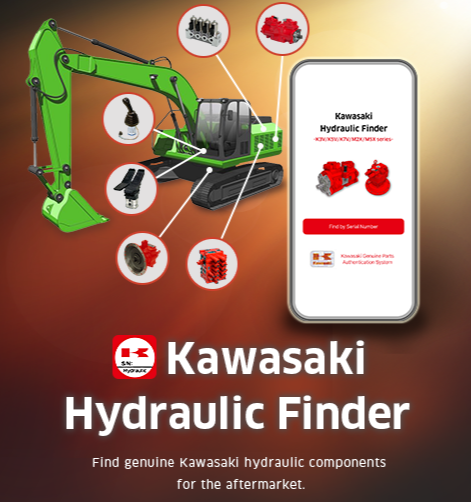
Reliable Identification and Ordering of Genuine Parts Using Apps and Other Tools
To obtain the correct genuine parts, it is essential to know the model number and part number of the equipment
currently in use.
Today, convenient apps and services are available that let you identify genuine parts quickly using a smartphone.
These tools save you the trouble of searching through complex catalogs and help prevent mistakes when ordering parts.
By entering the serial number on the nameplate, you can identify compatible parts, and if the number is hard to read,
you can sometimes send a photo and receive support.
To shorten repair time and streamline maintenance work, make active use of these modern tools.
Summary: Extend Machine Life Through Proper Hydraulic Pump Maintenance
Using genuine parts is essential for maintaining the high performance of construction machinery and preventing
downtime.
At the same time, the market today is full of low-quality non-genuine parts that can lead to poor performance and
premature failure.
When arranging replacement parts, working through an authorized dealer is the most reliable approach.
When it is time to replace parts, make use of Kawasaki Hydraulic Finder, which is available on smartphones and the
web.
By using the serial number shown on the unit’s nameplate, you can identify genuine parts, obtain accurate information,
and contact an authorized dealer.
Secure the right parts and keep your machinery operating longer.
Reviewed by

Ryoji Irie
Manager
After-Sales Promotion Office, Marketing & Sales Group, Precision Machinery & Robot Company, Kawasaki Heavy Industries, Ltd.
《Career History》
After joining Kawasaki Heavy Industries, I spent ten years developing the new K7V pump series as a design engineer, followed by five years at KPM (UK) as an application engineer supporting European OEMs and distributors. I am currently responsible for promoting the after-sales business globally.