Column
Excavator Hydraulic Pump Guide: How It Works, Warning Signs, and Repair Costs
Have you noticed your hydraulic excavator slowing down during operation or leaking oil from the machine? If the hydraulic pump—the component at the heart of a construction machine—fails, it can lead to project delays and costly repairs.
This article explains the basic operating principles of a hydraulic pump, five warning signs that can help you detect
trouble early on site, and typical repair costs by component.
Use it as a reference for proper hydraulic pump maintenance and prompt parts replacement.
The Role of the Hydraulic Pump and an Overview of the Hydraulic Circuit
The hydraulic pump converts power from the engine into hydraulic energy and serves as the heart of the hydraulic
excavator.
To deal effectively with problems in the hydraulic system, it is essential to understand the role of the pump and how
the hydraulic circuit works.
Here, we explain how the pump transmits power to each part of the machine from three perspectives.
- The difference between the main pump and the pilot pump
- The overall structure of the hydraulic circuit and the flow of power
- Types of pump control systems and how they work
Let’s take a closer look at each one.
Related Articles:Parts of an Excavator: Main Components, Structure, and Genuine Parts Guide
The Difference Between the Main Pump and the Pilot Pump
Hydraulic excavators are equipped with two types of pumps, each serving a different purpose.
The first is the main pump, which supplies a large volume of pressurized fluid to the attachments and the travel
motors.
A variable-displacement piston pump is commonly used for this purpose, allowing it to generate substantial power.
The second is the pilot pump, which converts movement of the control levers into hydraulic signals.
This is often a small gear pump and plays a supporting role, using the small force applied to the levers in the cab to
actuate the large main control valve.
By working together, these two pumps make it possible to combine the power needed to excavate heavy soil with the
precise control expected by the operator.
Related Articles:Hydraulic Pump Components Guide: Main Parts, Functions, and Failure Response
The Overall Structure of the Hydraulic Circuit and the Flow of Power
The power in a hydraulic excavator is generated within a circulating system that begins at the engine and returns to
the hydraulic fluid tank.
First, the engine drives the main pump, which draws hydraulic fluid from the tank and pressurizes it.
The pressurized fluid is then sent to the main control valve, which governs the machine’s movements.
When the operator moves a control lever, the valve opens and directs the appropriate amount of pressurized fluid to
the required circuit.
The fluid then flows to the hydraulic cylinders that move the boom and arm, as well as to the travel motors that drive
the machine.
Finally, it is cooled by the oil cooler and returned to the hydraulic fluid tank.
Types of Pump Control Systems and How They Work
The systems used to control the main pump and regulate fluid volume can be broadly divided into two functions: pump
horsepower control and pump flow control.
Pump horsepower control automatically distributes engine output among multiple hydraulic pumps so that the total
demand does not exceed the engine’s maximum capacity and stall it.
Pump flow control, on the other hand, reduces losses by preventing unnecessary hydraulic fluid from being discharged
and returned to the tank when the machine is idling or the controls are not being operated.
To achieve this, systems such as negative control, positive control, and load-sensing control are used, helping
improve fuel efficiency and overall operating performance.
Five Warning Signs of Hydraulic Trouble You Can Spot on Site
When a problem develops in the hydraulic pump or circuit, the machine’s behavior usually changes in noticeable
ways.
If you catch these early warning signs and respond quickly, you can prevent major failures and costly repairs.
There are five signs in particular to watch for during operation on site.
- Reduced output and loss of power
- Unusual noise during operation
- Oil leaks around the machine
- Slower operating speed
- Rising hydraulic fluid temperature
Let’s look at each symptom one by one.
Reduced Output and Loss of Power
If the machine can no longer lift heavy soil or feels weak when traveling, there may be a problem in the hydraulic
system.
When components inside the pump wear, the pump can no longer generate sufficient pressure.
A faulty main relief valve or an insufficient hydraulic fluid level can also cause a loss of power.
If power drops sharply when the oil temperature rises, there is a strong possibility that internal leakage inside the
pump is allowing pressure to escape.
Related Articles:Hydraulic Pump Not Building Pressure? Causes, Troubleshooting Steps, and Repair Costs
Unusual Noises During Operation
The cause of unusual noises near the hydraulic pump cannot be determined from the sound alone.
Noise from surrounding components, such as the reduction gearbox or piping, may travel to the area around the pump.
Common causes include:
- Internal pump wear
- Bearing damage
- Insufficient hydraulic oil or incorrect oil viscosity
- A clogged suction filter
- Air entering through the suction piping
- An incorrectly installed coupling
Cavitation caused by a drop in suction pressure and aeration caused by air entering the system can also produce unusual noises.
During inspection, record which operation produced the noise, along with the oil temperature, engine speed, and hydraulic oil level.
If you hear metallic noises or notice sudden vibration, stop operating the machine and have it inspected by a specialist.
Oil Leaks Around the Machine
Finding hydraulic oil underneath the machine or around the arm does not necessarily mean the hydraulic pump is faulty.
Common leak points include:
- Hydraulic hoses and pipe fittings
- Joints in the pump housing
- Shaft seals
- Areas around hydraulic cylinder rods
Do not assume that a component has reached the end of its service life based on minor seepage alone.
It is important to check where the oil is leaking, how much is leaking, and which operations cause the leak.
Oil leaking from higher up may run down to a different location, so shut down the machine and clean the surrounding area to help identify the source.
Operating the machine with a low hydraulic oil level can lead to inadequate lubrication or pump damage.
High-pressure hydraulic oil can penetrate the skin, so never use your hands or a cloth to locate a leak.
Release any residual hydraulic pressure according to the operator’s manual, and consult a specialist for a detailed inspection or component replacement.
Slower Operating Speed
If the boom rises or the upperstructure swings more slowly than before even when the control lever is fully engaged,
that is another typical warning sign.
It indicates that the volume of fluid being delivered by the pump is insufficient.
Possible causes include a clogged hydraulic filter preventing the pump from drawing in enough fluid, or wear inside
the pump allowing fluid to escape through increased clearances.
A sticking control valve can also restrict the flow path and slow down operation.
Rising Hydraulic Oil Temperature
The appropriate operating temperature and warning threshold for hydraulic oil vary depending on the machine model, the oil used, and the working environment.
Do not apply a single temperature limit to every machine. Check the values specified in the operator’s manual and any warnings on the machine’s display.
Common causes of rising oil temperature include:
- A clogged oil cooler
- A faulty cooling fan
- Insufficient hydraulic oil
- Clogged filters
- Continuous relief valve operation
- Internal leakage in the pump or valves
Heat buildup can result not only from cooling system problems but also from energy losses within the hydraulic circuit.
When taking measurements, also record the ambient temperature, engine speed, and load conditions, and compare the readings with those recorded during normal operation.
Do not touch hot components directly. Check the temperature using the machine’s display or an appropriate temperature-measuring instrument.
If the temperature exceeds the specified limit, stop operating the machine and investigate the cause.
Check for Causes Other Than the Hydraulic Pump
A loss of power or slow operation in a hydraulic excavator can also result from faults in components other than the hydraulic pump.
Start by checking the hydraulic oil level and looking for contamination.
Verify that the oil type and viscosity meet the manufacturer’s specifications, and check for a milky appearance.
Within the hydraulic circuit, incorrect relief valve settings or internal leakage in the control valve may be responsible.
Wear in hydraulic cylinders or motors can also reduce force or operating speed.
If the symptoms affect only one function, prioritize checking the valves and actuators associated with that function.
If engine speed or power output is insufficient, even a properly functioning pump cannot deliver the required hydraulic output.
A specialist will measure pressure, flow, and the pump’s case drain flow under consistent oil temperature, engine speed, and load conditions to determine whether the fault lies in the pump itself or in the surrounding components.
Typical Costs of Hydraulic System Repair or Replacement and Key Points for Selecting Parts
When a problem occurs in the hydraulic system, one of the first concerns is how much the repair will cost.
Understanding the total cost—including labor and travel charges as well as the parts themselves—can help with
budgeting.
In this section, we explain four key points related to repair costs.
- Typical repair and replacement costs for hydraulic pumps
- Factors that affect repair costs
- The features of genuine, remanufactured, and used parts, and how to choose among them
- How to reliably identify genuine parts using an app
Let’s take a closer look.
Related Articles:Hydraulic Pump Repair Cost: Typical Prices for Excavators and Construction Machinery
Typical Hydraulic Pump Repair and Replacement Costs
The cost of repairing a hydraulic pump and its associated components varies considerably depending on the repair method chosen.
The main options are:
- Replacing individual hydraulic hoses or seals
- Overhauling the hydraulic pump
- Replacing the pump with a rebuilt unit
- Replacing the pump with a new unit
If only hoses or external seals need to be replaced, the scope of work is relatively limited. For an overhaul, costs depend on the extent of damage to internal components and whether reconditioning work is required.
Replacing the pump with a rebuilt or new unit involves removal, reinstallation, and transport costs in addition to the price of the pump itself.
The extent of internal damage can differ even when the symptoms are the same, so do not base your decision solely on a general price range.
Check the machine type and model, along with parts availability, and compare the total costs in quotes provided after diagnosis.
Factors Affecting Repair Costs
Hydraulic pump repair costs include various labor and service charges in addition to replacement parts.
The main cost items are:
- Parts
- Fault diagnosis
- Pump removal and reinstallation
- Disassembly and inspection
- Cleaning
- Reconditioning work
- Reassembly and adjustment
- Performance testing
In many cases, the pump’s internal condition cannot be assessed until it is disassembled, so the preliminary estimate may differ from the formal quote issued after disassembly.
Costs also vary with replacement part prices and availability.
If wear particles have spread through the hydraulic oil, the circuit will also need to be flushed, and the oil and filters replaced.
When reviewing the quote, check not only the charges for each stage of work but also how you will be notified if additional work is needed and how any extra costs will be handled.
Criteria for Choosing Between Repair, Overhaul, and Replacement
Choose a hydraulic pump repair method based on the extent of damage, cost, and turnaround time. If damage is limited to seals, O-rings, or similar components, consider replacing only the affected parts.
Even if internal components are worn, an overhaul may be an option if the casing and major components can be reused and replacement parts can be sourced.
If you cannot accommodate the time needed to repair the existing pump, replacing it with a compatible rebuilt unit may reduce downtime, provided one is in stock.
If casing damage or seizure leaves few components suitable for reuse, consider replacing the pump with a new unit.
When deciding, compare the following:
- Repair costs
- Parts lead times
- Warranty periods
- How long the machine will be out of service
- Planned future use of the machine
Review the disassembly and inspection findings and the quote, and factor in long-term maintenance costs when making your decision.
The Features of Genuine, Remanufactured, and Used Parts, and How to Choose Among Them
Replacement parts include genuine parts, remanufactured parts, used parts, and low-cost non-genuine aftermarket
parts.
Genuine parts offer the reassurance of manufacturer quality assurance and are designed to meet the original
specifications.
They are the best choice for core machines that you plan to keep in service for the long term.
Non-genuine and used parts, on the other hand, may carry risks such as premature failure, damage to surrounding
components, and loss of warranty coverage, which can ultimately lead to higher costs and more downtime.
Remanufactured parts are overhauled by specialist companies and can help reduce costs, but you should evaluate them
carefully by checking their quality and whether they come with a warranty.
How to Reliably Identify Genuine Parts Using an App
When arranging replacement parts, accurate identification is essential because even the same type of construction
machine may have different hydraulic specifications.
Installing an incompatible part can result not only in improper operation but also in new failures.
To avoid ordering mistakes and save time, a manufacturer-provided smartphone app can be extremely useful.
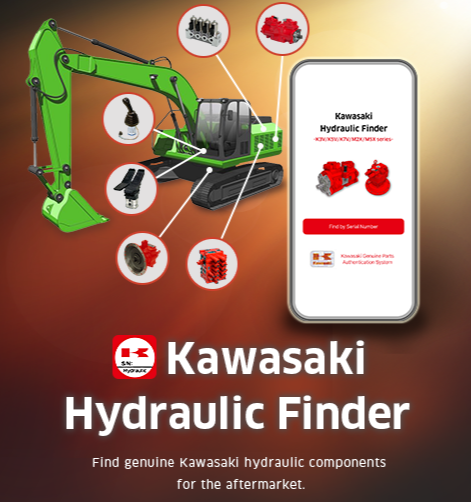
For example, if you are using pumps or motors made by Kawasaki Heavy Industries, you can simply enter the serial
number shown on the nameplate into “Kawasaki Hydraulic Finder” to quickly identify the correct genuine parts.
For more reliable and efficient maintenance, it is worth considering digital tools like this.
Summary: Early Detection and Day-to-Day Management Help Extend Hydraulic Pump Life
Continuing to operate a machine with a problem in the hydraulic system can expand the scope of the repair and drive up
costs.
When considering repairs or parts replacement, the first step is to confirm whether the installed components are
genuine parts.
By entering the serial number shown on the nameplate into “Kawasaki Hydraulic Finder,” you can identify genuine parts,
confirm accurate information, and contact authorized dealers more smoothly.
To maintain the performance and durability of your valuable machinery, be sure to make use of it.
Reviewed by

Ryoji Irie
Manager
After-Sales Promotion Office, Marketing & Sales Group, Precision Machinery & Robot Company, Kawasaki Heavy Industries, Ltd.
《Career History》
After joining Kawasaki Heavy Industries, I spent ten years developing the new K7V pump series as a design engineer, followed by five years at KPM (UK) as an application engineer supporting European OEMs and distributors. I am currently responsible for promoting the after-sales business globally.