Column
Hydraulic Pump Repair Cost: Typical Prices for Excavators and Construction Machinery
When a hydraulic pump begins to malfunction, an excavator may move more slowly or lose power, causing serious
disruption to work on site.
When considering repairs, many people wonder how much it will cost and which service provider they should choose.
This article explains the role of hydraulic pumps, the causes behind common failure symptoms, and typical repair costs
for services such as overhaul and parts replacement.
It also covers the differences between genuine and non-genuine parts and how to choose a repair provider, so use it as
a reference when deciding how to handle hydraulic pump repairs.
The Role of Hydraulic Pumps in Construction Machinery
In construction machinery, the hydraulic pump is the heart of the system. It converts engine power into hydraulic
energy and sends it to cylinders and motors throughout the machine.
It supports essential jobsite operations such as raising and lowering the boom and driving the machine.
As basic background knowledge, this section explains the following two points.
- How hydraulic pumps work and what they do
- Types of pumps used in construction machinery
Understanding the basic structure and types of hydraulic pumps will make it easier to understand failure symptoms and repair costs.
How Hydraulic Pumps Work and What They Do
A hydraulic pump uses the rotational force of an engine or motor to move hydraulic fluid.
By moving gears, pistons, or other internal components, it draws fluid from the tank, pressurizes it, and discharges
it.
The pump continuously delivers the fluid at a consistent flow rate, supplying power to each part of the machine
through the piping.
The pressure generated in this way becomes the force that extends and retracts the arm or turns the travel mechanism,
enabling powerful work.
As internal wear progresses, discharge volume and pressure decline, reducing work efficiency. This is why regular
maintenance is essential.
Types of Pumps Used in Construction Machinery
Hydraulic pumps commonly used in construction machinery include gear pumps, vane pumps, and piston pumps.
Gear pumps have a relatively simple structure and are generally cost-effective, so they are often used in small and
medium-sized equipment or auxiliary systems.
Vane pumps use sliding vanes to move fluid and are suited to equipment that requires low pulsation and quiet
operation.
For large excavators and similar machinery, piston pumps are the mainstream choice because they can handle high
pressure. Their high-pressure capability and variable displacement mechanism make it easier to adjust output according
to load.
Because each pump type has a different structure and suitable pressure range, the inspection points and expected
repair costs will vary depending on the type installed.
Related Articles:Hydraulic Pump Components Guide: Main Parts, Functions, and Failure Response
Symptoms and Causes of Hydraulic Pump Failure
Hydraulic pump failure does not always appear as a sudden stop. In many cases, it shows up gradually as signs such as a loss of power.
To help you compare these symptoms with the trouble you are facing, this section introduces three common symptoms and their causes.
- Low hydraulic pressure or sluggish operation
- Oil leaks or hydraulic fluid seepage
- Unusual noise, abnormal vibration, or rising temperature
Recognizing these changes early and responding promptly can help prevent major failures and reduce repair costs.
Related Articles:Hydraulic Pump Repair: Costs, Common Failure Causes, and Contractor Selection Guide
Related Articles:Hydraulic Pump Failure: Common Causes, Symptoms, and Troubleshooting Tips
Low Hydraulic Pressure or Sluggish Operation
If the bucket moves slowly or the boom feels weak when being raised, hydraulic pressure may not be building
properly.
Common causes include increased internal leakage due to pump wear, reduced discharge volume, insufficient hydraulic
fluid, or a clogged filter.
Air may also be drawn in from the suction side, preventing pressure from stabilizing.
If this condition is left unaddressed, the load on the entire machine increases, placing stress not only on the pump
but also on valves and cylinders.
For that reason, it is important to notice changes in pressure gauge readings or machine behavior early and carry out
inspection or adjustment.
Oil Leaks or Hydraulic Fluid Seepage
If you see oil seepage or dripping around the hydraulic unit, pipe connections, or pump shaft, possible causes include
deteriorated seals and packings or insufficient tightening at connection points.
Even a small leak can reduce the amount of hydraulic fluid during continued operation, leading to lower hydraulic
pressure and higher fluid temperature.
Leaked oil can also attract soil and dust, making it difficult to identify the source from appearance alone.
By checking where oil has adhered and how the area is contaminated, and by replacing hoses or seals or rechecking
tightening torque early, you can prevent the problem from developing into a major repair.
Unusual Noise, Abnormal Vibration, or Rising Temperature
If you hear a whining or knocking sound from the hydraulic pump, or if the pump body becomes abnormally hot, it may be a sign that bearings, valve plates, pistons, or other components are wearing down.
If air is drawn in on the suction side and cavitation occurs, the shock caused by collapsing bubbles can damage
internal parts and generate heat.
If hydraulic fluid temperature continues to rise, lubricating performance decreases and wear accelerates further.
If you notice unusual noise or abnormal heat, request an inspection as soon as possible.
The Hydraulic Pump Itself May Not Be at Fault
Symptoms such as failure to build hydraulic pressure, slow operation, or insufficient force do not necessarily indicate a fault in the hydraulic pump itself.
Similar symptoms can also result from the following problems:
- A low hydraulic oil level or deteriorated oil
- Clogged filters
- Air entering through the suction piping
- Oil leaks from hoses or fittings
- A faulty relief valve
- Internal leakage in the control valve
- Damaged cylinder seals
- Reduced engine power output
If all functions lack power, check the hydraulic oil and systems shared by those functions, such as the suction system and engine.
If only one function lacks power, prioritize inspecting the control valve and cylinder associated with that circuit.
Do not replace components based on symptoms alone. Measure pressure and flow under consistent oil temperature, engine speed, and load conditions.
Compare the readings at the pump outlet with those on the actuator side to identify the cause.
Typical Repair Costs by Type of Work
Repair costs around a hydraulic pump can vary widely, from minor parts replacement to full disassembly and reconditioning of the pump body. The total cost depends on how much work is required.
To give you a general idea, this section compares costs from the following three perspectives.
- Overhaul
- Parts replacement
- Main factors that affect repair costs
Let’s look at each one.
Related Articles:Hydraulic Pump Replacement Guide: Cost, Timing, Procedures, and Maintenance Tips
Overhaul (Disassembly and Servicing)
Overhauling a hydraulic pump involves disassembly, cleaning, and dimensional measurements, followed by replacement of damaged components, reassembly, adjustment, and performance testing.
Costs vary depending on the size class of the construction equipment, the pump type, and the extent of wear or damage to internal components.
In some cases, overhauling the main pump on medium or large construction equipment costs around ¥300,000 to ¥1,000,000, but this is not a standard price range that applies to all models.
Because the extent of internal damage cannot be determined from an external inspection alone, a formal quote may not be provided until after disassembly and inspection.
Also check whether pump removal and reinstallation, transport, and hydraulic oil are charged separately.
Parts Replacement
Parts replaced in and around the hydraulic pump can be grouped by location and function as follows:
- Sealing components: Oil seals, O-rings, packing seals, and gaskets
- Associated components: Hoses, piping, and fittings
- Internal components: Pistons, cylinder block, valve plate, and bearings
Depending on where the damage is located, replacing individual sealing or associated components may be sufficient.
Replacing internal components, however, requires pump disassembly and dimensional measurements, followed by adjustment and performance testing after reassembly.
When reviewing the quote, check the labor costs for removal, reinstallation, and disassembly as well as the cost of parts.
Main Factors That Affect Repair Costs
Hydraulic pump repair costs vary depending on the machine class—small, medium, or large—the pump type, whether genuine
parts are used, and the availability of replacement parts.
For example, variable displacement piston pumps installed in large excavators are complex and use expensive
components, so the same type of work tends to cost more than it would for a smaller machine.
For imported machines or models that have been out of production for many years, genuine parts may be difficult to
obtain, making it necessary to rely on remanufactured or rebuilt parts.
Labor costs also vary depending on the distance to the jobsite and the working environment. To manage costs
effectively, obtain quotations from multiple providers and compare the details of the work and pricing.
Replacement with a Rebuilt or New Hydraulic Pump
A rebuilt hydraulic pump is a used unit that has been disassembled, cleaned, and reassembled after its worn components have been replaced.
If a compatible unit is in stock, it can be installed without waiting for the existing pump to be overhauled and may cost less than a new pump.
However, the extent of reconditioning, the parts replaced, performance testing procedures, and warranty periods vary by supplier, so check these details in advance.
Consider replacing the pump with a new unit if damage extends to the casing or major components, or if the cost of an overhaul approaches the price of a new pump.
Although a new pump tends to cost more than a rebuilt unit, its compatibility and warranty terms are easier to verify.
| Method | Scope of Work | Key Points to Check |
|---|---|---|
| Partial repair | Replace only damaged components, such as seals | Extent of damage and labor costs |
| Overhaul | Disassemble and service the existing pump | Parts availability and repair turnaround time |
| Replacement with a rebuilt pump | Replace the existing pump with a rebuilt unit | Extent of reconditioning, performance testing, and warranty coverage |
| Replacement with a new pump | Replace the existing pump with a new unit | Compatibility, price, lead time, and warranty coverage |
How to Choose a Repair Method and Why Genuine Parts Matter
When a problem occurs, there are several possible responses, from replacing the failed component with a new genuine part to using non-genuine or remanufactured parts.
To help you choose the best repair method for the situation, this section explains the following three points.
- The benefits of replacing parts with new genuine components
- The risks of using non-genuine or remanufactured parts
- Accurate parts identification using the serial number
For peace of mind, consider not only short-term cost but also machine operating conditions and reliability.
Criteria for Choosing Between Repair, Overhaul, and Replacement
Choose how to address a hydraulic pump fault based on the extent of damage identified through diagnosis or disassembly and inspection.
The main criteria are:
- If damage is limited to seals or packing, carry out a partial repair.
- If internal components are worn but the major components can be reused, overhaul the pump.
- If a shorter turnaround time is needed, replace the pump with a rebuilt unit that is in stock.
- If the casing is damaged or the pump has seized, replace it with a new pump.
- If repair parts are no longer supplied, replace the pump with a compatible rebuilt or new unit.
However, the extent of damage should not be the sole basis for choosing a repair method.
Compare repair costs, parts lead times, warranty periods, and how long the machine will be out of service.
Consider all these factors, along with the machine’s planned future use, before making a decision.
Benefits of Using New Genuine Replacement Parts
New genuine parts are manufactured to the specifications and quality standards set by the manufacturer. The main benefits are:
- It is easier to select parts that match the machine model and pump specifications.
- Performance and durability standards are easier to verify.
- Warranty terms and procedures for handling faults are clearly defined.
- Improved replacement parts may be available.
However, using genuine parts does not necessarily reduce overall costs.
Look beyond the initial cost and consider warranty coverage, how long you plan to use the equipment, and the possibility of further repairs.
It is also important to factor in potential losses from downtime when comparing options.
The Risks of Using Non-Genuine or Remanufactured Parts
Compatible parts from aftermarket manufacturers and remanufactured parts that have been disassembled and serviced can
be attractive options because they reduce parts costs.
However, their dimensions, materials, or internal structure may not match genuine parts exactly. This can create risks
such as insufficient performance, shorter service life, or the need for extra adjustment during installation.
With remanufactured parts, quality can also vary depending on the usage history of the original core and the quality
of the reconditioning work. It is important to confirm the warranty scope and support conditions in advance.
For main pumps that operate continuously under high pressure, the decision should not be based on short-term cost
alone. Choose the part based on the machine’s operating conditions and the level of reliability required on site.
Accurate Parts Identification Using the Serial Number
When arranging hydraulic pumps or related parts, it is effective to identify compatible parts using the machine’s
production number or serial number together with the manufacturer’s parts list or dedicated system.
Even if two machines have the same model name, the installed parts may differ depending on the year of manufacture or
specification changes. Judging by appearance alone can lead to problems such as receiving a part that does not fit.
By providing the serial number for confirmation, you are more likely to receive guidance on the most suitable part,
including improved or alternative versions.
To avoid rework and additional parts arrangements, it is reassuring to keep records of the serial numbers for both the
machine and its major components.
The Hydraulic Pump Repair Process
The hydraulic pump repair process begins with an initial inquiry and a review of the machine and pump details.
If necessary, the pump is removed, disassembled, and inspected to determine the required repairs.
Because internal wear and the extent of damage cannot be assessed through an external inspection alone, a formal quote may not be provided until after disassembly.
The repair process follows these steps:
- Provide details about the machine and hydraulic pump.
- Remove the hydraulic pump, then disassemble and inspect it.
- Review the formal quote and authorize the repair.
- Replace components and reassemble the pump.
- Reinstall the pump in the machine after performance testing.
Knowing what to check at each stage helps ensure clear communication with the repair service.
Gather Machine and Pump Details Before Contacting a Repair Service
Before contacting a repair service, gather information about the affected machine and its hydraulic pump.
Key details to have ready include:
- Machine manufacturer, model name, and model designation
- Machine serial number
- Operating hours
- Hydraulic pump model and serial number
- Current symptoms
Describe the symptoms clearly, such as slow operation, insufficient power, unusual noises, or oil leaks.
Information about which functions are affected, the oil temperature, and the engine speed when the symptoms occur can help the repair service narrow down which components to inspect.
Review the Formal Quote After Disassembly and Inspection
Once the repair service receives the hydraulic pump, it will disassemble and clean it to assess wear and damage to internal components. The main components inspected include:
- Pistons
- Cylinder block
- Valve plate
- Bearings
- Seals and O-rings
Because the extent of internal damage cannot be determined from an external inspection alone, some parts that require replacement may not be identified until the pump is disassembled.
A formal quote detailing the repair costs is then provided based on the inspection findings.
The amount may differ from the preliminary estimate, so confirm the scope of any additional work and the turnaround time.
Authorize the repair only once you are satisfied with the details.
Conduct Performance Tests After Parts Replacement and Reassembly
Once the formal quote has been approved, damaged components are replaced and reusable parts are serviced.
The hydraulic pump is then reassembled and adjusted to meet the specified performance requirements.
After repairs, performance testing checks the following:
- Whether discharge pressure reaches the specified value
- Whether the pump delivers the required flow
- Whether there are any oil leaks
- Whether there are any unusual noises or abnormal vibration
If no problems are found during performance testing, the pump is reinstalled in the machine.
The condition of the hydraulic oil, filters, and other relevant components is also checked before a test run is carried out. The repair is complete once normal operation has been verified.
When choosing a repair service, confirm that it provides not only parts replacement and reassembly but also post-repair performance testing and a test run after reinstallation.
How to Choose a Reliable Repair Service Provider
Hydraulic pump repair requires specialized expertise, and the quality of the work directly affects machine life and safety. For that reason, it is important to choose the service provider carefully.
To help you identify a suitable repair provider, this section explains the following two points.
- The difference between manufacturer-authorized service channels and specialist repair companies
- Essential items to check when requesting a quotation
Let’s look at each one in detail.
The Difference Between Manufacturer-Authorized Service Channels and Specialist Repair Companies
Manufacturer-authorized service channels and designated service workshops have the advantage of handling genuine parts
and performing maintenance based on the latest technical information and service manuals.
On the other hand, labor rates may be higher, and during busy periods it may take longer before they can respond.
Repair companies specializing in construction machinery often handle multiple manufacturers and may be able to propose
cost-saving options using remanufactured or rebuilt parts.
However, technical skill and service quality can vary, so it is important to compare providers by looking at their
past experience and how clearly the person in charge explains the work.
Essential Items to Check in a Repair Estimate
When reviewing a hydraulic pump repair estimate, look beyond the total cost and check how much each task will cost.
Key items to check include:
- Disassembly and inspection fees
- Pump removal and reinstallation costs
- Parts costs and labor charges for replacement
- Hydraulic oil and filter replacement costs
- Tank and piping cleaning costs
- Call-out charges and transport costs
- Performance testing and test run costs
- Return shipping costs if the pump cannot be repaired
Pay particular attention to charges that may still apply if you decide not to proceed with the repair after disassembly and inspection.
These may include disassembly and inspection fees and return shipping costs.
If wear particles or metal fragments have been generated inside the pump, cleaning the tank and piping and replacing the hydraulic oil and filters may also be necessary to prevent another failure.
Confirm in advance which tasks are included in the estimate and which are charged separately, and ask the repair service to explain the circumstances under which additional charges may apply.
Summary: Understand Hydraulic Pump Repair Costs and Choose the Right Response
To resolve a hydraulic pump problem, it is important not only to choose the right repair method and service provider,
but also to confirm whether genuine parts can be used.
The market includes third-party, counterfeit, and imitation parts with varying quality and specifications, and these
may reduce performance or cause unexpected downtime.
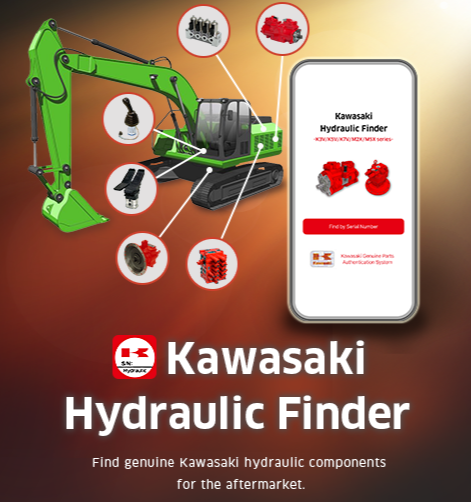
This is where “Kawasaki Hydraulic Finder” can help.
By simply entering the serial number shown on the unit’s nameplate, you can identify genuine Kawasaki Heavy Industries
hydraulic components installed on the machine and confirm accurate information.
Because accurate parts information is displayed, repair arrangements with official dealers can proceed more
smoothly.
Be sure to use it before arranging repairs or parts replacement.
Reviewed by

Ryoji Irie
Manager
After-Sales Promotion Office, Marketing & Sales Group, Precision Machinery & Robot Company, Kawasaki Heavy Industries, Ltd.
《Career History》
After joining Kawasaki Heavy Industries, I spent ten years developing the new K7V pump series as a design engineer, followed by five years at KPM (UK) as an application engineer supporting European OEMs and distributors. I am currently responsible for promoting the after-sales business globally.