Column
Hydraulic Pump Failure: Common Causes, Symptoms, and Troubleshooting Tips
When using construction machinery or agricultural machinery, you may suddenly encounter hydraulic system problems such
as sluggish movement or unusual noise.
Many people may feel unsure about how much repairs or parts replacement will cost, or how to identify the cause on
site.
This article explains the causes of hydraulic pump failure, specific symptoms to watch for, on-site diagnostic
procedures, and key points for choosing replacement parts.
It also explains how to find compatible genuine parts smoothly, so use it as a reference for machine maintenance and
repairs.
Symptoms That May Appear on Site When a Hydraulic Pump Fails
When a hydraulic system develops a problem, signs will appear in the machine’s movement or external condition.
If abnormalities are left unaddressed, they can lead to major damage, so it is important not to overlook the following
early warning signs.
- Operation becomes slow or response is delayed
- Unusual noise occurs
- Oil leaks occur
- Hydraulic fluid temperature rises
- Pressure does not build or oil is not drawn in
Detecting these five warning signs early can help reduce the scale of repairs.
Operation Becomes Slow or Response Is Delayed
A sluggish response after moving the control lever, or slower overall machine operation, is one of the easiest
problems to notice.
This occurs when the hydraulic system cannot secure enough fluid flow, preventing sufficient power from being
transmitted to the cylinders or motors.
Typical examples include a hydraulic excavator boom taking longer than usual to rise, or the swing motion feeling slow
and unresponsive.
Not only does this significantly reduce work efficiency, but continuing to force the machine to operate can also place
additional strain on other components.
Unusual Noise Occurs
Unusual noise coming from the pump body can also be a sign of a serious problem.
Harsh noise may occur when internal components are creating abnormal friction or when air has become mixed into the
hydraulic fluid.
Typical examples include a grinding, metal-on-metal sound or a gritty noise that sounds as if air is bursting inside
the pump.
If you hear these sounds, there is a high possibility that internal components have already begun to wear away.
Continuing to operate the machine in this condition can cause the pump to seize, so stop operation immediately and ask
a specialist service provider to inspect it.
Oil Leaks Occur
It is also common to see hydraulic fluid seeping or dripping from around the pump or from pipe connections.
This problem occurs when seals or packings that maintain internal pressure deteriorate and lose their sealing
performance.
If oil stains appear under the machine or the fluid level in the tank drops rapidly, there is likely a leak somewhere
in the system.
Oil leaks not only contaminate the surrounding environment, but also create risks such as component seizure due to
poor lubrication and fire caused by ignition.
Hydraulic Fluid Temperature Rises
Pay close attention if the hydraulic fluid temperature rises abnormally or the pump body becomes too hot to touch.
When oil does not flow smoothly inside the system and excessive friction or trapped pressure continues, energy is
released as heat.
If the system cannot maintain the proper temperature, the hydraulic fluid will deteriorate and may lose its
lubricating performance.
This is also an indicator that the cooling system may not be functioning properly or that serious internal wear may be
occurring.
If the oil temperature gauge exceeds the specified range or you notice a burnt smell, stop operation immediately, cool
the machine, and investigate the cause.
Pressure Does Not Build or Oil Is Not Drawn In
A pump may rotate but fail to reach the specified pressure, or it may fail to draw oil from the tank at all.
The main causes include a severely clogged suction filter or air being drawn in somewhere along the piping.
When this happens, the machine can no longer deliver its intended power, such as being unable to lift the arm.
First, check whether the tank contains the proper amount of hydraulic fluid, then inspect the piping for looseness and
the filter for contamination.
If the condition does not improve, you should suspect serious internal damage to the pump.
Related Articles:Hydraulic Pump Not Building Pressure? Causes, Troubleshooting Steps, and Repair Costs
Root Causes of Hydraulic Pump Failure
Behind visible symptoms are root causes that can shorten the service life of the machine.
Understanding the following factors in advance will help improve the quality of daily maintenance and inspection.
- Hydraulic fluid contamination
- Air entering the system
- Wear or damage to internal components
- Continuous operation under overload or excessive pressure
To prevent these problems, it is important to review day-to-day management and operating practices.
Related Articles:Hydraulic Pump Maintenance: Preventive Tips, Failure Signs, and Service Life
Hydraulic Fluid Contamination
One of the most common triggers of hydraulic system trouble is contamination of the hydraulic fluid with foreign
matter such as dirt or water.
If dust gets in during refilling or filters are not replaced for a long time, the cleanliness of the fluid will
decline significantly.
When contaminated fluid circulates through the system, it scrapes the pump’s precision sliding surfaces as if they
were being rubbed with sandpaper, making wear unavoidable.
Metal particles then damage other components, creating a vicious cycle.
This is why hydraulic fluid management is so important.
Air Entering the System
Air entering the hydraulic fluid and circulating as bubbles can also lead to catastrophic failure.
This can occur when air is drawn in through joints in the suction piping or when the fluid level in the tank is too
low.
When bubbles mixed into the fluid are rapidly crushed in the narrow spaces inside the pump, they generate powerful
shock waves capable of gouging metal surfaces.
This phenomenon is known as cavitation and is one of the causes that can dramatically shorten pump life while
producing loud noise.
Regularly retightening loose pipe connections and keeping the fluid level in the tank at the proper height can help
prevent this problem.
Wear or Damage to Internal Components
Physical wear of internal pump components due to aging and long operating hours is also unavoidable.
Moving parts such as bearings, cylinder blocks, and pistons gradually wear over time, even when the hydraulic fluid is
properly managed.
As the clearances between parts widen, oil escapes in unintended directions and the pump can no longer generate the
required pressure.
A pump that has exceeded a certain number of operating hours should be treated as a consumable component with a higher
risk of sudden failure.
Regular internal inspections by a specialist and timely replacement of worn components are essential.
Related Articles:Hydraulic Pump Components Guide: Main Parts, Functions, and Failure Response
Continuous Operation Under Overload or Excessive Pressure
Continuing heavy work beyond the machine’s capacity, or operating at high pressure because the relief valve is
improperly set, can also accelerate failure.
If force beyond the design limit is applied, the pump shaft may twist or the internal housing may crack.
Particular care is required on construction sites where repeated forced digging or lifting operations can place
sustained, trapped loads on the entire hydraulic system.
Always follow the rated pressure stated in the machine specifications and operate with an adequate safety margin.
Diagnostic Procedures for Determining Whether the Hydraulic Pump Has Failed
When you notice poor machine performance, do not disassemble parts at random.
Instead, checking the condition in the following sequence will lead to faster problem resolution.
- Check the appearance of the pump body and surrounding area
- Check for unusual noise and abnormal heat from the pump
- Check discharge pressure and internal leakage
By following these three steps, you can narrow down the problem area.
Related Articles:Hydraulic System Troubleshooting: Common Problems, Causes, and Solutions
Check the Appearance of the Pump Body and Surrounding Area
First, park the machine in a safe place and stop the engine. Then carefully visually inspect the area around the
hydraulic pump.
Check whether oil is seeping from pump joints or hose connections, and confirm that no bolts are loose.
It is also important to check the hydraulic fluid tank gauge and make sure the fluid level is within the specified
range.
If the fluid is extremely dark and cloudy, or if it appears milky because water has mixed in, fluid deterioration
should be suspected.
Even a visual inspection alone can help you detect physical damage early, such as torn hoses or serious oil leaks.
Check for Unusual Noise and Abnormal Heat from the Pump
If the external appearance shows no obvious problems, start the engine and operate the pump while carefully observing
changes in sound and temperature.
Listen closely for metallic grinding or gritty noises that are not normally present.
While taking safety precautions, carefully check whether the pump body or nearby piping is abnormally hot.
If it is too hot to keep touching, there may be severe internal friction or insufficient cooling.
If unusual noise and abnormal heat occur at the same time, serious damage is likely progressing, so stop the machine
immediately.
Check Discharge Pressure and Internal Leakage
To understand the condition more accurately, use dedicated measuring instruments to check pressure and oil leakage
numerically.
Connect a pressure gauge to the pump outlet and confirm whether the pump reaches the specified pressure stated in the
service manual.
Measuring the amount of oil returning to the tank through the drain line—internal leakage—is also effective.
When internal wear has progressed, pressure tends not to rise and the leakage volume often increases abnormally.
These measurements may require specialized knowledge, so avoid forcing the work yourself and request an inspection
from a manufacturer-authorized service center.
Types of Parts to Consider for Replacement and the Importance of Choosing Genuine Parts
When the pump reaches the end of its service life and replacement is required, the type of part you choose will affect
future machine operation.
To protect the machine, consider not only cost but also quality and warranty coverage.
Specifically, compare the following four points.
- Features and benefits of genuine parts
- Risks of using non-genuine parts
- Features and precautions of remanufactured parts
- Using a dedicated app to identify compatible parts
Let’s look at each one.
Features and Benefits of Genuine Parts
When purchasing a new pump or replacement parts, the most reliable option is to choose genuine parts supplied by the
machine manufacturer.
Because they are designed and tested from the machine development stage, they fit properly without dimensional or
performance discrepancies.
Their strength lies in high durability and reliability, allowing the machine to deliver its intended performance after
replacement.
Another advantage is the reassurance of manufacturer warranty coverage in the unlikely event of an initial defect.
Although genuine parts are generally priced higher, they are a cost-effective choice when long-term operational
stability is taken into account.
Risks of Using Non-Genuine Parts
The market contains many third-party, counterfeit, and imitation parts that are sold at lower prices than genuine
parts.
Although the lower initial cost may seem attractive, it is important to understand the risks involved.
Because manufacturing standards differ by supplier, quality can vary, and parts may wear out sooner than expected,
leading to another failure.
There are also many cases where slight dimensional differences damage surrounding components.
If non-genuine parts are installed, the manufacturer’s warranty for the machine itself may no longer apply, which can
ultimately increase repair costs significantly.
For this reason, caution is essential.
Features and Precautions of Remanufactured Parts
Another option is to use a remanufactured pump, which is produced by disassembling and cleaning a failed pump,
replacing only worn parts with new ones, and reassembling it.
This can reduce costs compared with purchasing a new genuine part and can also make effective use of resources.
However, quality can vary depending on the technical skill of the service provider performing the work.
If metal fatigue remains inside, or if the design tolerances and materials are not equivalent to those of genuine
parts, unexpected downtime may occur.
If safe and reliable operation is the priority, choosing a new genuine part is the wiser option.
Using a Dedicated App to Identify Compatible Parts
Finding the correct parts that match your company’s machinery can take time and effort.
This is especially true for older machine models, where it is not unusual to be unsure which part should be
ordered.
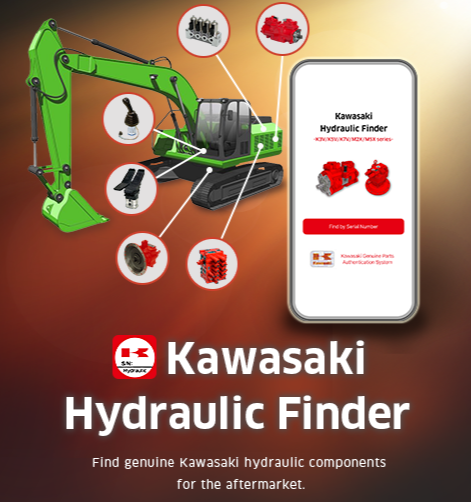
In such cases, the “Kawasaki Hydraulic Finder” app, which allows you to search for genuine parts easily from a
smartphone, is useful.
By simply entering the serial number on the nameplate, you can find the manufacturer, accurate product model and
product number, and the nearest authorized service center.
This helps prevent the mistaken purchase of similar or incompatible parts, reduces the burden on the person in charge,
and enables smoother repair arrangements.
Summary: Respond Properly to Hydraulic Pump Failure and Keep Your Machine Operating Safely for Longer
To restore machine performance after repairing a hydraulic pump, we recommend using compatible genuine parts.
However, low-quality third-party, counterfeit, and imitation parts are also available on the market, and there are
many cases where they are used without being recognized as non-genuine.
With the “Kawasaki Hydraulic Finder” app, you can identify genuine Kawasaki Heavy Industries pumps and motors
installed on your machine simply by entering the serial number on the nameplate.
Use it to obtain accurate information and arrange repairs smoothly.
Reviewed by

Ryoji Irie
Manager
After-Sales Promotion Office, Marketing & Sales Group, Precision Machinery & Robot Company, Kawasaki Heavy Industries, Ltd.
《Career History》
After joining Kawasaki Heavy Industries, I spent ten years developing the new K7V pump series as a design engineer, followed by five years at KPM (UK) as an application engineer supporting European OEMs and distributors. I am currently responsible for promoting the after-sales business globally.