Column
Hydraulic Motor Maintenance: Best Practices, Warning Signs, and Maintenance Procedures
Have you ever noticed something wrong with the hydraulic motor while using construction equipment day after day?
Unusual noises, oil leaks, and sluggish operation can lead to serious failure if left unaddressed, affecting both
repair costs and project schedules.
Hydraulic motors are core components that support the drive functions of construction equipment, and regular
inspection and proper maintenance play a major role in determining the service life of the machine.
This article explains the warning signs that appear before a hydraulic motor fails, the steps for daily inspection,
and the criteria for deciding when to consult a specialist service provider.
Use it as a reference for maintenance management on site.
The Role of Hydraulic Motors in Construction Equipment
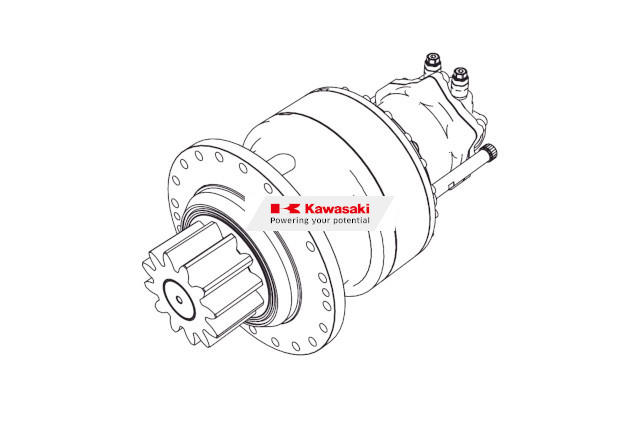
A hydraulic motor is a device that converts hydraulic fluid pressure into rotary motion.
It generates a wide range of movements in construction equipment, such as the swing and travel functions of hydraulic
excavators and the rotary drive of crushers.
For example, hydraulic excavators are typically equipped with two types of hydraulic motors: a swing motor that
rotates the upperstructure and travel motors that drive the undercarriage.
Related Articles:Parts of an Excavator: Main Components, Structure, and Genuine Parts Guide
In this way, hydraulic motors are directly connected to the operation of construction equipment. If a problem occurs,
the performance of the entire machine can decline.
To maintain productivity on site, it is important to understand their structure and operating principles and manage
them properly on a day-to-day basis.
Warning Signs of Hydraulic Motor Failure You Should Not Ignore
Before a hydraulic motor stops completely, it usually shows some kind of warning sign.
To detect problems early on site and prevent further damage, keep the following four common signs in mind.
- Unusual noises occur
- Hydraulic fluid leaks
- Machine operation becomes slower
- The motor body becomes abnormally hot
Taking action early can help reduce repair costs and shorten downtime.
Related Articles:Hydraulic Motor Repair Guide: When to Repair or Replace, Costs, and Service Provider Selection
Unusual Noises Occur
If you hear a sound that is different from the normal operating noise, or a high-pitched hissing sound, suspect a
problem inside the hydraulic motor.
A gritty sound, like gravel being crushed, is often caused by cavitation, a phenomenon in which air enters the piping
and bubbles collapse inside the fluid.
Air can enter more easily when pipe connections are loose or when the hydraulic fluid level is low, so these areas
require attention.
On the other hand, a sharp hissing or high-pitched sound may indicate advancing wear in internal bearings or sliding
components.
In either case, ignoring the problem can allow damage to spread and increase the scope of repair. As soon as you
notice a change in sound, inspect the machine promptly.
Hydraulic Fluid Leaks
If you see oil seepage or dripping around the hydraulic motor, leakage is occurring either internally or
externally.
External leakage is most often caused by age-related deterioration of packings or sealing materials at connection
points.
As rubber seals crack or harden, they lose their sealing ability, allowing hydraulic fluid to escape.
If hydraulic pressure drops even though no external leak is visible, oil may be escaping internally through clearances
created by worn components inside the motor.
Internal leakage is difficult to confirm visually, so it is usually judged from indirect signs such as lower pressure
gauge readings or sluggish operation.
In either case, leaving hydraulic fluid loss unaddressed can cause seizure or secondary failure, so early action is
essential.
Machine Operation Becomes Slower
If movements such as raising and lowering the arm of a hydraulic excavator or swinging the upperstructure feel slower
than usual, the hydraulic motor may be losing performance.
As internal components wear, hydraulic fluid may leak internally instead of following its intended path, preventing
the motor from generating sufficient rotational force.
Other possible causes include contaminated hydraulic fluid or reduced viscosity, which can prevent hydraulic pressure
from rising properly.
When metal particles or foreign matter enter the fluid, valves and sliding components may no longer move smoothly,
reducing the efficiency of pressure transmission.
Because slower operation directly affects productivity, check the condition of the hydraulic fluid and the system
pressure as soon as you feel that the machine may be moving more slowly than normal.
The Motor Body Becomes Abnormally Hot
If the hydraulic motor body feels clearly hotter than usual to the touch, it may be overheating.
Common causes of overheating include reduced viscosity due to deteriorated hydraulic fluid, cooling system problems,
and increased internal leakage.
If extremely high temperatures continue, sealing materials deteriorate faster, which can lead to even more leakage and
create a vicious cycle.
Operating continuously at pressures or rotational speeds above the design rating can also increase internal friction
heat and cause overheating.
If you notice abnormal heat, stop the machine immediately and check the cooling system, the hydraulic fluid level, and
the degree of contamination.
Specific Procedures for Hydraulic Motor Maintenance
To prevent hydraulic motor problems before they occur, it is important to carry out daily inspections and scheduled parts replacement in a planned manner.
Here are three maintenance procedures that can be practiced on site.
- Visually inspect each area during daily checks
- Replace hydraulic fluid and filters regularly
- Take proper measures when the machine will not be used for an extended period
All of these can be done without special equipment, so it is a good idea to incorporate them into your routine work.
Related Articles:Hydraulic System Maintenance Checklist: Basic Practices to Extend Equipment Service Life
Visually Inspect Each Area During Daily Checks
A visual inspection before starting work is a simple and effective way to detect hydraulic motor abnormalities
early.
During inspection, focus on hose and pipe connections, as well as the exterior of the motor body.
If you find seepage or dripping, it may be an early sign of seal deterioration. Replacing the affected parts early can
help prevent a major failure.
Also check that the motor mounting bolts are not loose and that the piping is free from cracks or abrasion.
If a pressure gauge is installed, read the value at the start of work and confirm that it is within the range
specified by the manufacturer.
Replace Hydraulic Fluid and Filters Regularly
Hydraulic fluid is the lifeline of a hydraulic motor, providing both lubrication and cooling. Continuing to use
deteriorated fluid accelerates wear on internal components.
As a general rule, replacement should be carried out according to the schedule specified by the equipment
manufacturer.
When replacing the fluid, check its color and smell. If it is dark and cloudy or has a burnt odor, deterioration is
progressing.
Filters should be cleaned or replaced according to the manufacturer’s recommended schedule, and the replacement
frequency should be increased at dusty jobsites.
By managing the hydraulic fluid and filters together, you can help keep the entire hydraulic circuit clean.
Take Proper Measures When the Machine Will Not Be Used for an Extended Period
If construction equipment will not be used for several months or longer, the steps you take before storage can affect
the service life of the hydraulic motor.
Retract the cylinders and apply rust-preventive oil to any exposed rods.
If the machine is left as-is, moisture can cause rust, which may damage the seals when the machine is returned to
service.
Replacing the hydraulic fluid with new fluid and filling the tank can also help reduce moisture contamination caused
by condensation.
If possible, start the engine every few weeks to circulate the hydraulic fluid and distribute an oil film throughout
the system. This helps prevent trouble when the machine is put back into operation.
Initial On-Site Actions and When to Consult a Specialist
If you notice something unusual with a hydraulic motor, first carry out the checks that can be done safely on site, then decide whether to contact a specialist service provider.
Here, the response process is divided into three stages.
- Assess the situation visually and with a pressure gauge
- Decide whether repair by a specialist is necessary
- Understand the importance of using an authorized service center and identifying parts accurately
Let’s look at each step in detail.
Assess the Situation Visually and with a Pressure Gauge
If you notice an abnormality, first stop the machine safely before checking the situation.
External leakage can be identified visually, but internal problems are easier to assess by measuring pressure on the
inlet and outlet sides with a pressure gauge.
For example, if the inlet pressure is normal but the outlet pressure is low, there is a high possibility of internal
leakage inside the motor.
Recording the type and location of the noise, the degree of vibration, and the oil temperature will also be useful
when explaining the situation to a specialist later.
The information gathered at this stage can affect the accuracy of the repair estimate, so record as many details as
possible.
Related Articles:Hydraulic System Troubleshooting: Common Problems, Causes, and Solutions
Decide Whether Repair by a Specialist Is Necessary
Based on the results of your on-site checks, decide whether the issue can be handled in-house or whether it should be
referred to a specialist.
Minor work such as retightening loose piping, replacing filters, or topping up hydraulic fluid can often be handled on
site.
However, if internal leakage is suspected or the repair requires disassembling the motor body, it is best to leave the
work to a specialist service provider with dedicated test equipment and measuring instruments.
For older machines that have passed through multiple owners, or machines that have been modified, identifying the
correct parts can be especially difficult. In such cases, consulting a capable service provider early is the safest
approach.
The Importance of Using an Authorized Service Center and Accurate Parts Identification
For hydraulic motor repairs and parts replacement, using a manufacturer-authorized service center provides greater
peace of mind.
Authorized facilities have dedicated test benches and genuine parts available, and they perform disassembly,
inspection, and reassembly according to manufacturer specifications.
Low-cost alternatives may look similar from the outside, but their design precision can differ, potentially affecting
surrounding components or voiding warranty coverage.
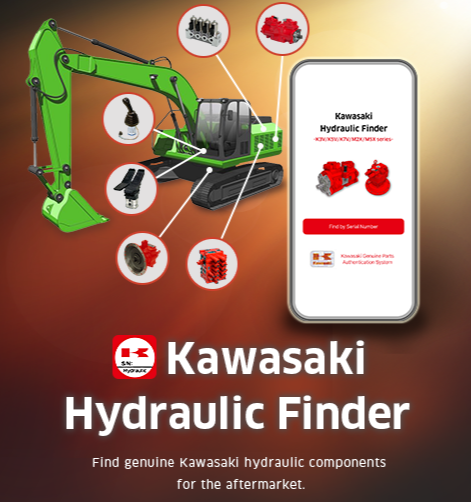
With “Kawasaki Hydraulic Finder,” you can identify genuine parts and confirm accurate information simply by entering
the serial number from the nameplate of a Kawasaki Heavy Industries product.
Summary: Extend Hydraulic Motor Life Through Proper Maintenance
Stable operation of construction equipment requires not only inspection and maintenance of hydraulic motors, but also
the ability to choose high-quality parts when repairs are needed.
Low-cost third-party, counterfeit, and imitation parts that resemble genuine parts are also available on the market,
but because they may offer lower durability and performance, they can lead to unexpected downtime.
To maintain performance and service life, the safest approach is to obtain genuine parts through an authorized service
center.
By using Kawasaki Heavy Industries’ “Kawasaki Hydraulic Finder,” you can confirm the manufacturer, accurate product
model, and product number from the serial number on the nameplate.
You can then use the information you obtain to contact the nearest authorized service center smoothly, so be sure to make use of it.
Reviewed by

Ryoji Irie
Manager
After-Sales Promotion Office, Marketing & Sales Group, Precision Machinery & Robot Company, Kawasaki Heavy Industries, Ltd.
《Career History》
After joining Kawasaki Heavy Industries, I spent ten years developing the new K7V pump series as a design engineer, followed by five years at KPM (UK) as an application engineer supporting European OEMs and distributors. I am currently responsible for promoting the after-sales business globally.